South Africa Cannot Wait for Government to Fix the Water Crisis


This article has been supplied.
By: Murray Crow - Managing Director, Kwikot Powered by Haier
South Africa has spent the past decade learning how quickly infrastructure failure can move from being a government problem to becoming an economic one. We saw it with electricity, as unreliable supply disrupted businesses and eventually forced companies to build resilience for themselves. Water is now moving in the same direction, but the consequences are even more fundamental. There is no substitute for water in a factory, hospital, hotel, school or home. Once supply and sanitation systems begin to fail, the effects spread rapidly through communities and local economies.
The warning signs are already visible. A recent GroundUp investigation, drawing on Department of Water and Sanitation data, found that none of the 13 wastewater treatment works managed by Mangaung is operating properly. The report also describes significant water losses and unreliable supply. Mangaung illustrates the wider economic and social risks of allowing water infrastructure problems to deepen.
South African companies have already lived through one version of this story. When electricity became unreliable, businesses initially waited for the system to stabilise. Eventually, they stopped waiting. They installed solar, batteries, generators and energy-management systems. They reconfigured operations and invested in resilience. None of that removed government’s responsibility to provide electricity, but it changed the role business was willing to play in protecting its own continuity.
Water is approaching the same point. A business can generate electricity on site. It cannot manufacture, host guests, run a hospital, process food or maintain sanitation without water. Water is not a secondary infrastructure issue. It is the infrastructure beneath the economy.
Addressing the problem will require more than funding alone. South Africa needs sustained infrastructure investment alongside support for the skills, systems and maintenance capacity that keep water services working. Government’s National Water Action Plan identifies stronger institutions, improved maintenance and better protection of revenue collected for water services as priorities. Ensuring that more of this revenue supports the systems that deliver water would help municipalities plan and maintain infrastructure before problems become more costly to resolve.
This is where the private sector needs to change its posture. Business cannot remain an observer, issuing statements about infrastructure decline while waiting for the state to recover its delivery capacity. South Africa has world-class engineers, manufacturers, plumbers, technicians, financiers and technology providers. We have the skills to identify leaks, improve metering, rehabilitate infrastructure, train artisans, structure finance and manage complex projects. Too much of that capability currently sits outside the municipal system.
The answer is not for business to replace government. Government must remain accountable for water services. But public accountability and practical delivery are not the same thing. Private-sector capability should be brought in far more aggressively to strengthen execution, whether through engineering support, maintenance partnerships, technology deployment, skills development or infrastructure financing.
The Water Services Amendment Bill currently before Parliament may strengthen compliance and accountability, but regulation alone will not repair a pipeline or restore a wastewater plant. A policy does not train an artisan. A licence does not maintain infrastructure. South Africa needs a model where regulation protects the public interest while qualified capability is deployed quickly where systems are failing.
Business also needs to think beyond its own premises. Backup tanks and boreholes may protect one site, but they do not build a resilient local economy. A hotel cannot prosper in a town where communities lack water. A factory cannot thrive indefinitely where sanitation systems are collapsing. Water insecurity spreads because infrastructure is shared.
The lesson from the energy crisis is that waiting is expensive. We should not wait for the water equivalent of Stage 6 load shedding before acting.
At Kwikot, more than 120 years operating at the intersection of water, energy and the built environment has taught us one thing: water infrastructure is almost invisible when it works, but everything feels its absence when it fails.
The question corporate South Africa should be asking is no longer when government will fix the water crisis. It should be asking what capability it can bring to the table now.
Because if business waits until the taps run dry before treating water security as its own problem, we will already have waited too long.
Article Enquiry
Email Article
Save Article
Feedback
To advertise email advertising@creamermedia.co.za or click here
Projects
Latest Multimedia
Latest News

Showroom
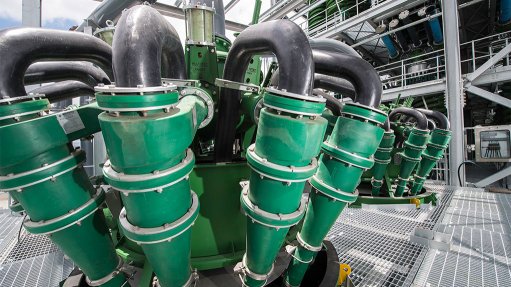
Multotec, recognised industry leaders in metallurgy and process engineering help mining houses across the world process minerals more efficiently,...
VISIT SHOWROOM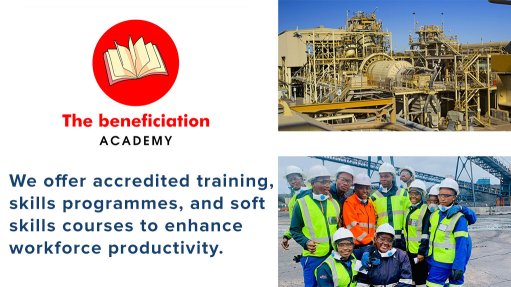
The Beneficiation Academy is a certified training institution that follows all compliance legislation and is accredited with various Sector...
VISIT SHOWROOM

Press Office
Announcements
What's On
Subscribe to improve your user experience...
Option 1 (equivalent of R125 a month):
Receive a weekly copy of Creamer Media's Engineering News & Mining Weekly magazine
(print copy for those in South Africa and e-magazine for those outside of South Africa)
Receive daily email newsletters
Access to full search results
Access archive of magazine back copies
Access to Projects in Progress
Access to ONE Research Report of your choice in PDF format
Option 2 (equivalent of R375 a month):
All benefits from Option 1
PLUS
Access to Creamer Media's Research Channel Africa for ALL Research Reports, in PDF format, on various industrial and mining sectors
including Electricity; Water; Energy Transition; Hydrogen; Roads, Rail and Ports; Coal; Gold; Platinum; Battery Metals; etc.
Already a subscriber?
Forgotten your password?
Receive weekly copy of Creamer Media's Engineering News & Mining Weekly magazine (print copy for those in South Africa and e-magazine for those outside of South Africa)
➕
Recieve daily email newsletters
➕
Access to full search results
➕
Access archive of magazine back copies
➕
Access to Projects in Progress
➕
Access to ONE Research Report of your choice in PDF format
RESEARCH CHANNEL AFRICA
R4500 (equivalent of R375 a month)
SUBSCRIBEAll benefits from Option 1
➕
Access to Creamer Media's Research Channel Africa for ALL Research Reports on various industrial and mining sectors, in PDF format, including on:
Electricity
➕
Water
➕
Energy Transition
➕
Hydrogen
➕
Roads, Rail and Ports
➕
Coal
➕
Gold
➕
Platinum
➕
Battery Metals
➕
etc.
Receive all benefits from Option 1 or Option 2 delivered to numerous people at your company
➕
Multiple User names and Passwords for simultaneous log-ins
➕
Intranet integration access to all in your organisation